The Best Fluffy Pancakes recipe you will fall in love with. Full of tips and tricks to help you make the best pancakes.

Tonkatsu is a beloved Japanese comfort food featuring a deep-fried, breaded pork cutlet, made by coating pork (loin or fillet) in flour, egg, and airy Japanese panko breadcrumbs, then frying until golden and crispy
A noodle is a staple food made from unleavened dough (flour, water, sometimes egg) rolled flat and cut into long strips or other shapes, central to Asian and Italian cuisines (pasta) and found globally in soups, stir-fries, and baked dishes
I think you mean tonkatsu (Japanese breaded pork cutlet). If that’s right, here’s a simple, home-style tonkatsu recipe 🍖
(If you meant a different dish, tell me and I’ll adjust.)
Tonkatsu (Japanese Pork Cutlet)
Ingredients
- 2 pork chops (boneless, about 1–1.5 cm thick)
- Salt & black pepper
- ½ cup all-purpose flour
- 1 egg (beaten)
- 1 cup panko breadcrumbs (important!)
- Oil for deep frying (vegetable or canola)
Optional (for serving)
- Shredded cabbage
- Tonkatsu sauce (or ketchup + Worcestershire sauce mix)
- Steamed rice
Instructions
- Prepare the pork
- Pat pork dry.
- Lightly pound to even thickness.
- Season both sides with salt and pepper.
- Bread the pork
- Coat pork in flour (shake off excess).
- Dip into beaten egg.
- Press into panko breadcrumbs until fully coated.
- Heat the oil
- Heat oil to about 170–175°C (340–350°F).
- Oil should be deep enough to cover the pork.
- Fry
- Fry pork for 3–4 minutes per side until golden brown.
- Do not overcrowd the pan.
- Drain & rest
- Remove and place on a rack or paper towel.
- Let rest 2 minutes, then slice into strips.
Serve
- With shredded cabbage and rice
- Drizzle tonkatsu sauce on top or serve on the side
Tips
- Panko makes it extra crispy—don’t use regular breadcrumbs.
- Don’t flip too often; once per side is best.
- Chicken can be used instead (called chicken katsu
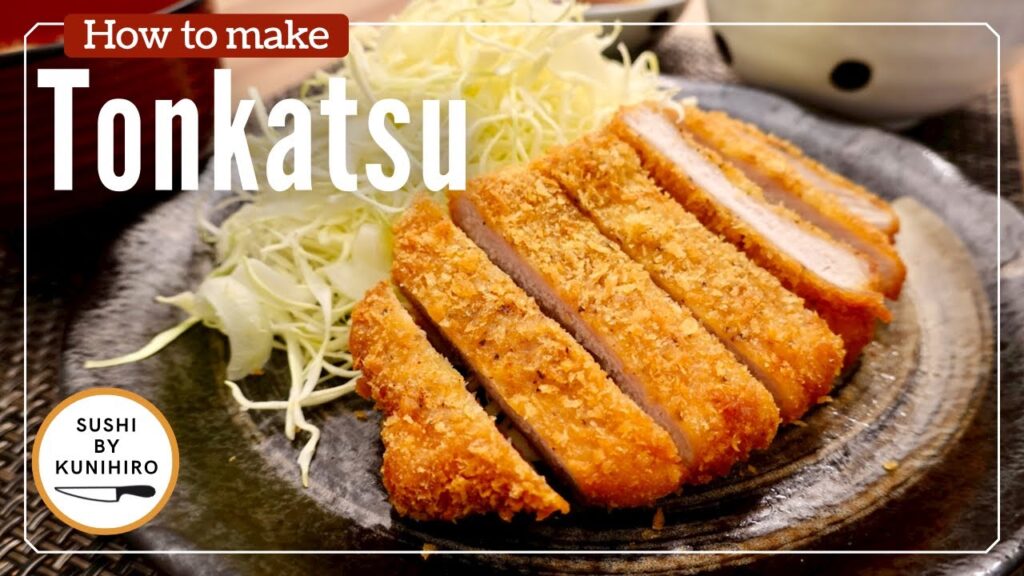
It consists of a boneless pork chop that is seasoned, coated in flour, egg, and panko breadcrumbs, then fried until golden and crispy on the outside while remaining tender and juicy inside. Tonkatsu is usually sliced into strips and served with shredded cabbage, steamed rice, and a thick, slightly sweet tonkatsu sauce.
The dish is well known for its crunchy texture, savory flavor, and comforting, hearty feel. It is commonly eaten in Japanese homes, restaurants, and bento meals.
Tonkatsu (とんかつ, 豚かつ) is tender pork loin that’s breaded in Japanese panko breadcrumbs and deep-fried until golden. The word ton (豚) comes from “pork,” while katsu (カツ) derives from the word “cutlet.” Fried cutlets in Japan appeared in the 1870s and were primarily made using beef. After much tinkering, the Japanese adapted the original French recipe to suit their palate. Today, it’s much-loved and widely available in countless Japanese specialty restaurants.
Why I Love This Recipe
- The light and crispy breading – I use flaky panko breadcrumbs for their light, fine, and supercrisp crunch.
- A versatile recipe – We typically serve it with a heaping pile of cabbage and a side of pickles, but you could cook it over tender onions and serve it on rice to make my favorite donburi, Katsudon.
- Simple, yet irresistible – The ingredient list is short and the cook time is minimal, yet you’ll make a richly flavored and textured dish that everyone will love.
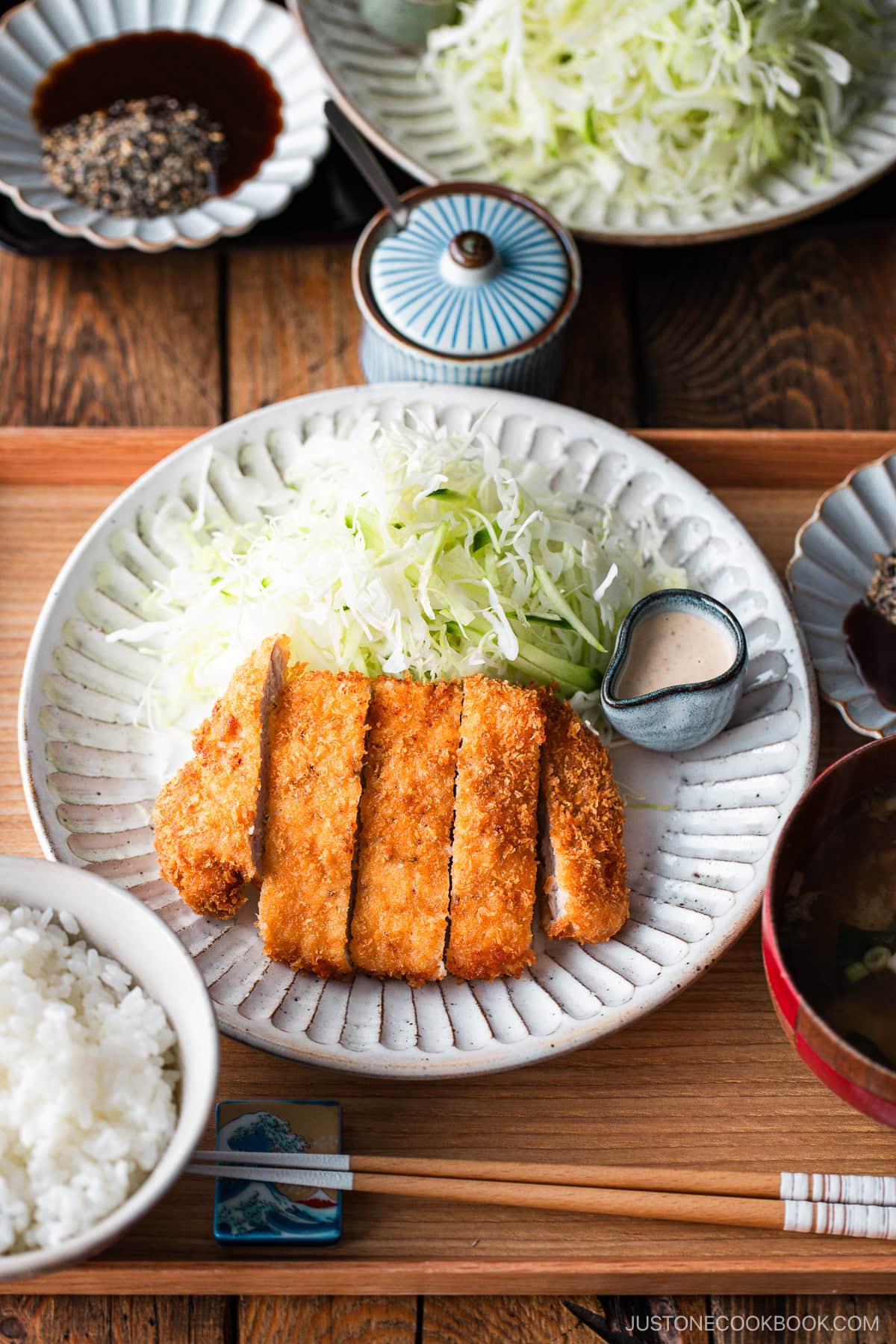
What to Serve with Tonkatsu
- Cabbage slaw – Toss a shredded cabbage and cucumber slaw in Japanese Sesame Dressing or your favorite Asian dressing.
- Pickles – chop up some veggies to make crunchy Asazuke for a slightly sweet and salty flavor and a lovely textural contrast with the tonkatsu.
- Hearty soup – Tonjiru or Clam Miso Soup is commonly served at Tonkatsu restaurants, making them the perfect companion.
- Rice – It’s easy to make Japanese Short-Grain Brown Rice in a rice cooker.
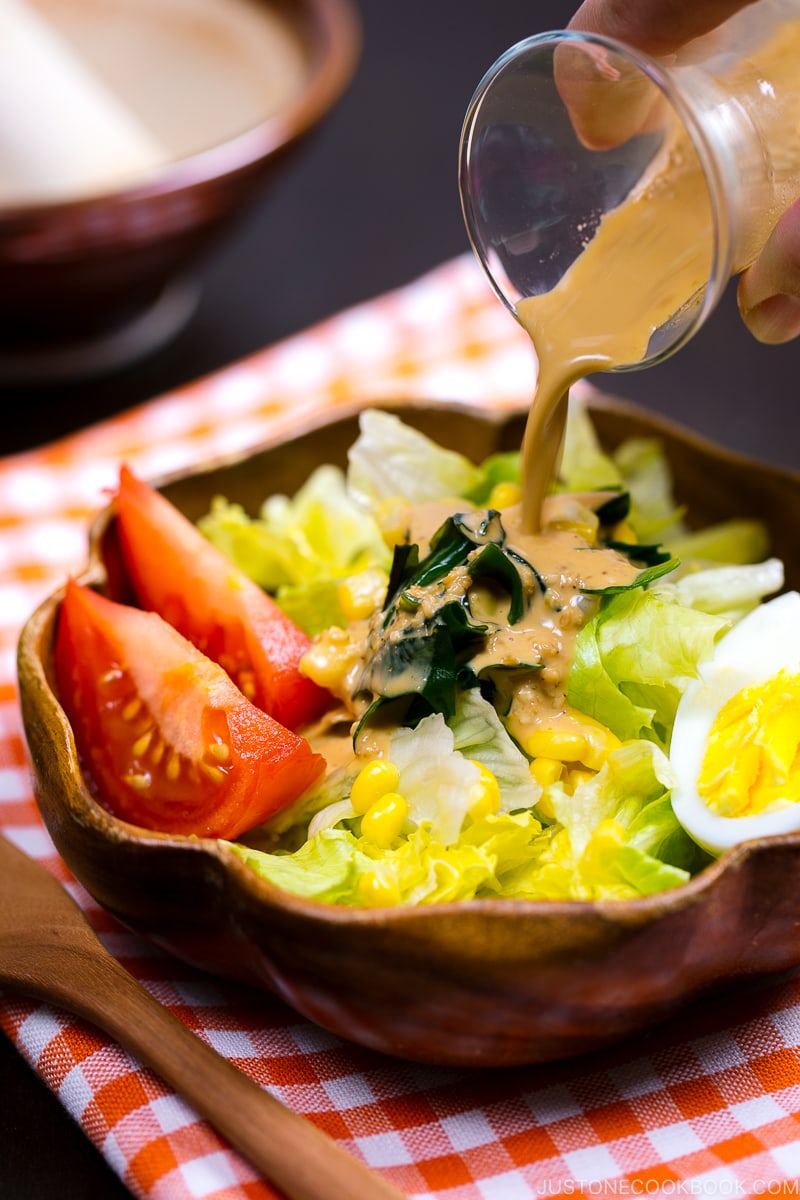
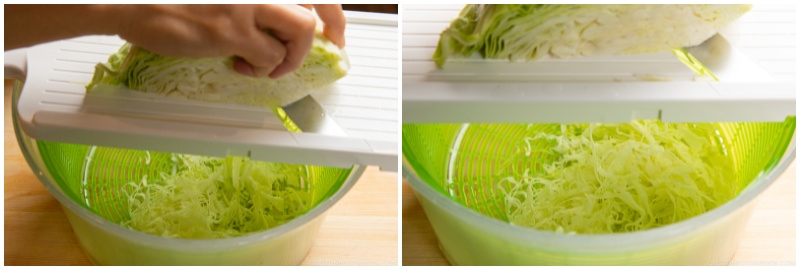
To Prepare the Shredded Cabbage (optional)
- In Japan, we serve tonkatsu with a side of fresh shredded cabbage. To prepare it, shred ¼ head green cabbage very finely with a sharp knife or slicer. I love to use a cabbage slicer (you can get one from Amazon or JOC Goods) because it saves time and energy! I also thinly slice 1 Japanese or Persian cucumber diagonally, then cut them into thin strips. Toss the cabbage and cucumber together and set aside. Prepare 4 Tbsp Japanese sesame dressing (store bought or make homemade Japanese Sesame Dressing) and keep refrigerated until ready to serve.
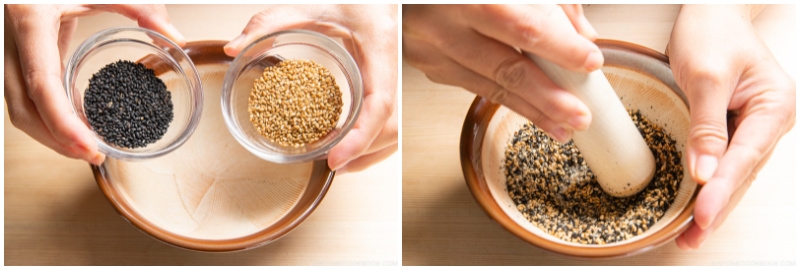
To Make the Dipping Sauce
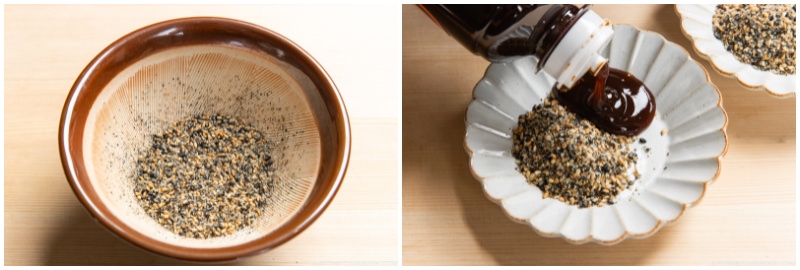
- Grind 1 Tbsp toasted white sesame seeds and 1 Tbsp toasted black sesame seeds with a Japanese mortar and pestle. Leave some seeds unground for texture.
- Divide the ground sesame seeds among individual dipping plates or bowls. Then divide 4 Tbsp tonkatsu sauce (store bought or homemade) among them. Set aside until ready to serve. Each person can mix it together when ready to eat. Note: In Japan, we often drizzle straight tonkatsu sauce on our cutlets without adding sesame seeds. Feel free to serve this dish with straight tonkatsu sauce instead, if you prefer.
To Prepare the Fresh Panko and Breading
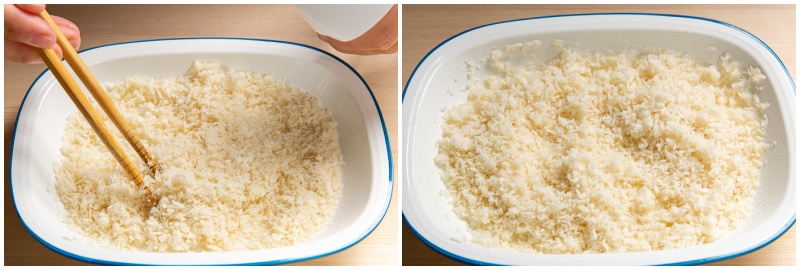
- If you are using dry panko from the store, place ½ cup panko (Japanese breadcrumbs) in a deep dish and spray with water until the panko is moist (I use a mister). Set aside for 15 minutes, or until the panko becomes soft and tender. Optionally, you can make fresh panko by pulsing some Shokupan (Japanese Pullman bread) in a food processor.
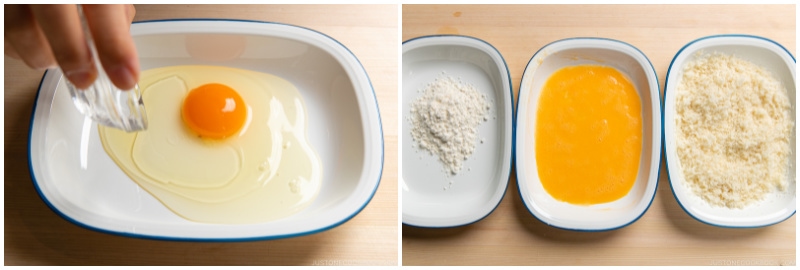
- Meanwhile, prepare the other breading ingredients. Crack 1 large egg (50 g each w/o shell) into a deep dish or my favorite prep trays. Add ½ Tbsp neutral oil and whisk together until well combined. Then, prepare another dish or tray with 2 Tbsp all-purpose flour (plain flour). Tip: By adding oil, the breading won’t detach from the meat while deep-frying and this will help seal in the meat’s juices and flavor.
To Prepare the Pork
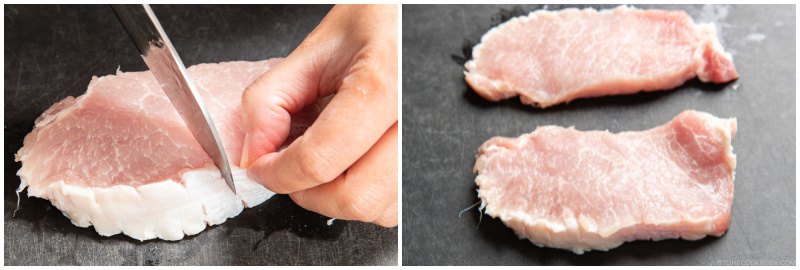
- Use a sharp knife to remove the extra fat from 2 boneless pork loin chops (½ inch thick). Then, make several small slits on the connective tissue (the white area) between the meat and fat. Tip: Red meat and fat have different elasticities, and they shrink and expand at different rates while cooking. These slits will allow the tonkatsu to stay flat during cooking instead of curling up.
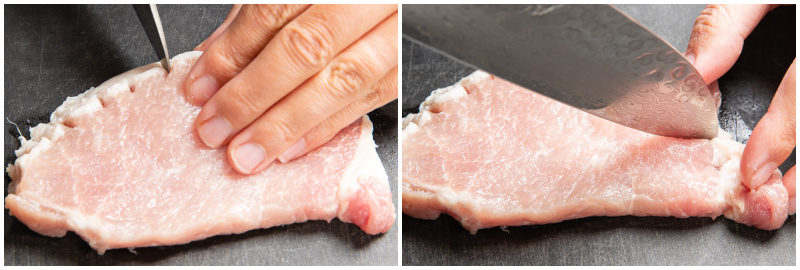
- Flip the meat and make several slits on the other side of the connective tissue.
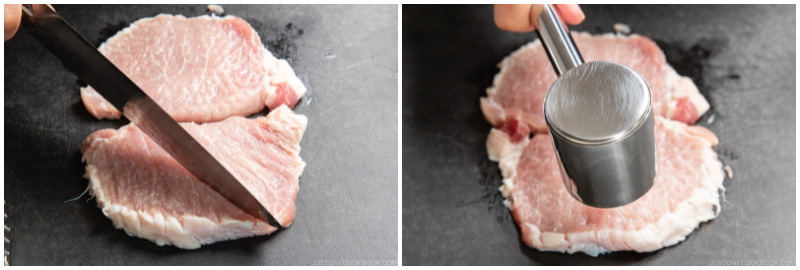
- Pound both sides of the meat with the back of a knife or a meat tenderizer/mallet.
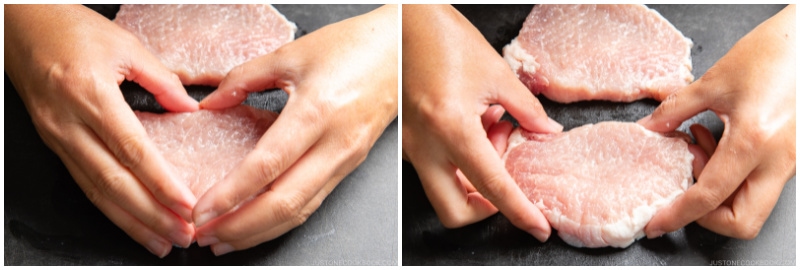
- Mold the cutlet back into its original shape with your hands.
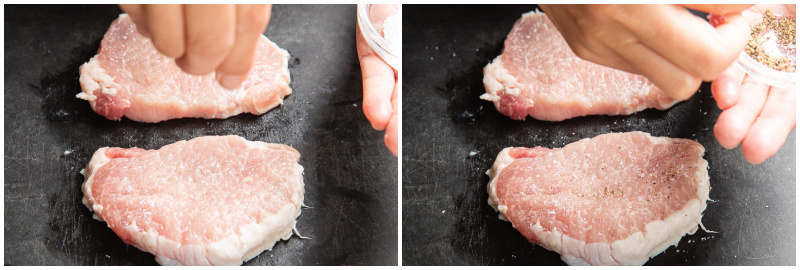
- Season both sides with ½ tsp Diamond Crystal kosher salt and ⅛ tsp freshly ground black pepper.
To Bread the Pork
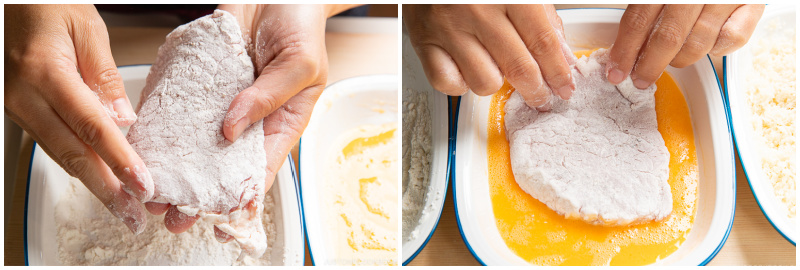
- First, dredge the pork in the flour and dust off any excess. Next, dip the pork into the egg mixture and coat well. Tip: Excess flour will prevent the egg mixture from adhering to the pork.
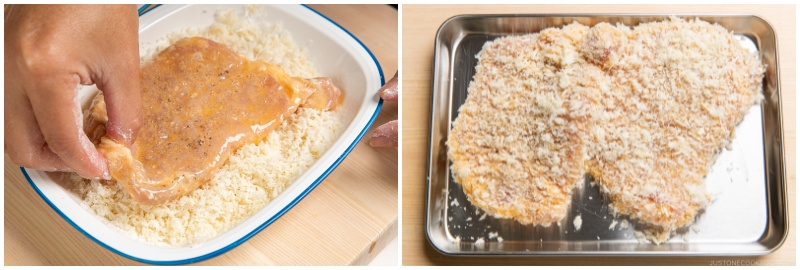
- Lastly, dredge the pork in the fresh panko and gently press it to adhere to the cutlet. Gently shake off any excess, then place the breaded cutlets onto a tray or plate. Set them aside for 5–10 minutes to set the breading. Tip: The panko will “puff up” while deep-frying, so it doesn’t have to be fluffy at this stage.
To Cook: The First Fry
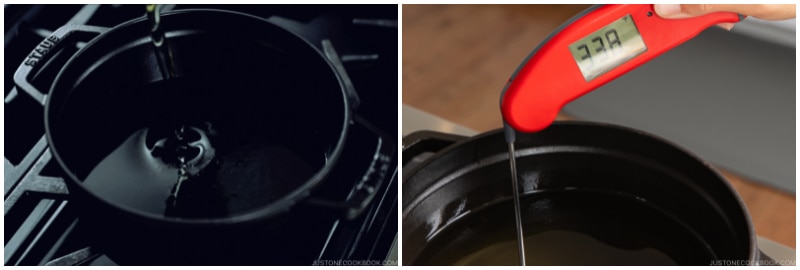
- Add 3 cups neutral oil to a pot. Make sure your oil is 1¾–2 inches (5 cm) deep. I use the tip of a chopstick to measure. Preheat on medium heat and bring the oil to 340ºF (170ºC). Tip: If you don’t have a thermometer, stick a chopstick in the oil; if you see tiny bubbles appear around the tip, it is hot enough. Alternatively, you can drop in a piece of panko; if it sinks down and immediately pops up to the surface, then the oil is ready.
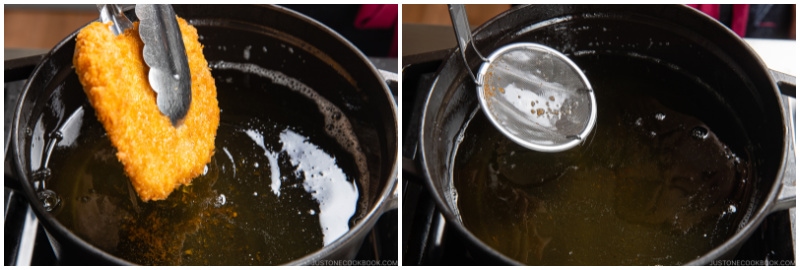
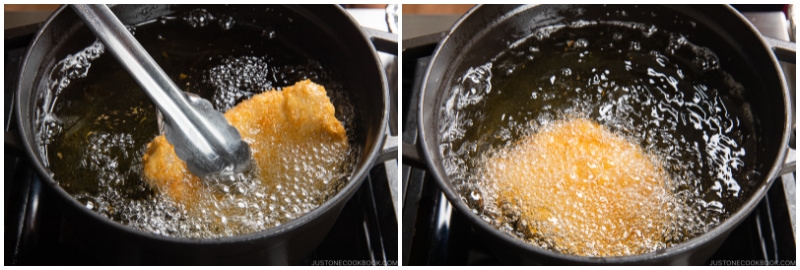
- Gently put one pork cutlet into the oil and let it cook for 1 minute. Don‘t flip it or touch it for 30 seconds. Tip: Why one piece at a time? Too much food at once will drastically reduce the oil temperature, and the tonkatsu will absorb too much oil. You should see big oil bubbles when you add the pork. Also, monitor the oil temperature so it doesn’t rise above 340ºF (170ºC). If it does, the breading will get dark before the pork is cooked and you meat will be undercooked.
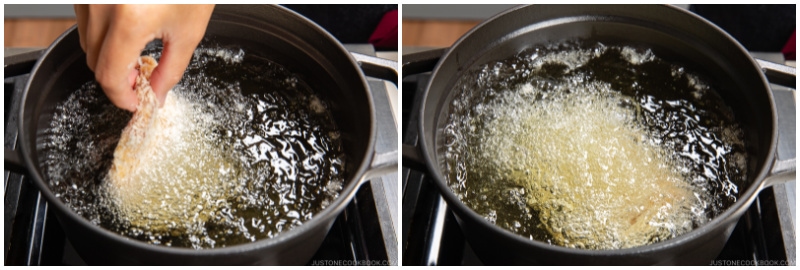
- After a minute, flip the pork and cook the other side for 1 minute.
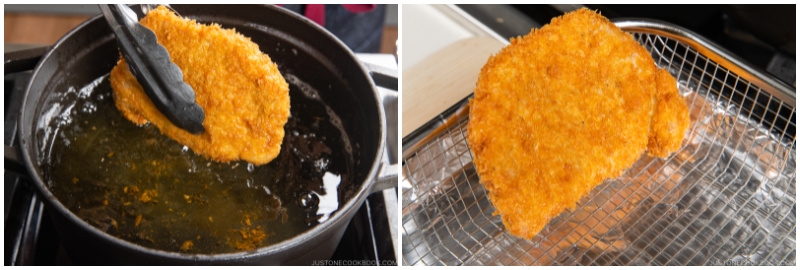
- Remove the pork and let the excess oil drip off by holding the cutlet vertically over the pot for a few seconds. Place it on a wire rack or paper towel and prop it on its side, if possible, to drain excess oil. Let it sit for 4 minutes. The residual heat will continue to cook the meat as it rests.
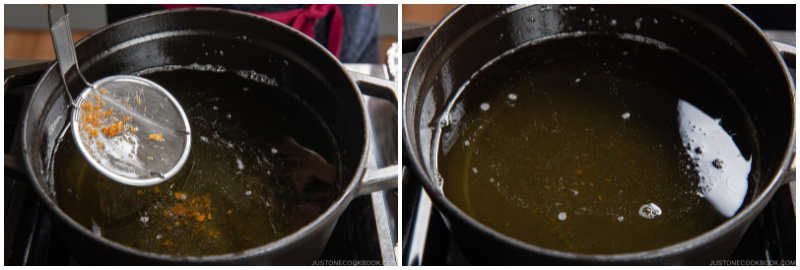
- Turn off the heat temporarily. Scoop up and discard any fried crumbs in the oil with a fine-mesh strainer. Keep the oil clean of fried crumbs, which can burn and make the oil dark and dirty. Then, turn on the heat again to medium and bring the oil back to 340ºF (170ºC).
- While the first cutlet is resting on the wire rack, deep-fry the second cutlet for 1 minute without flipping. Do not touch it for 30 seconds.
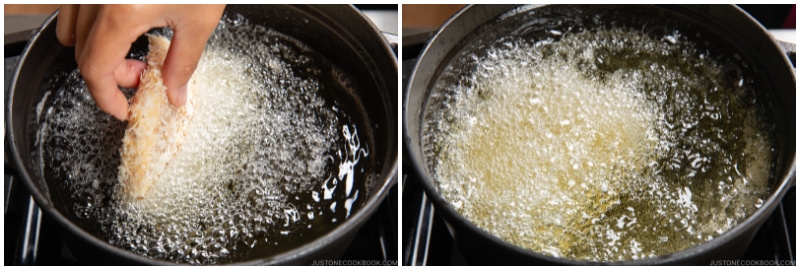
- Flip and cook the other side for 1 minute.
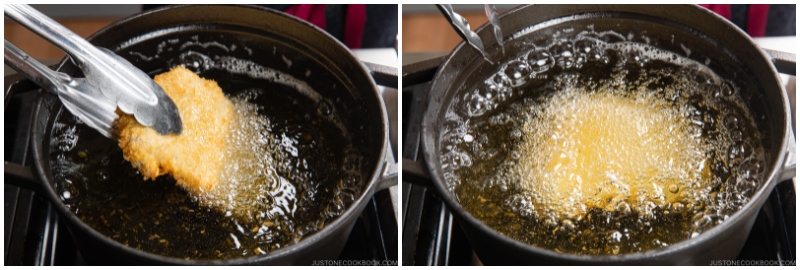
- Take out the pork and drain the excess oil as before. Place it on the wire rack and let it rest for 4 minutes. Clean the oil of fried crumbs.